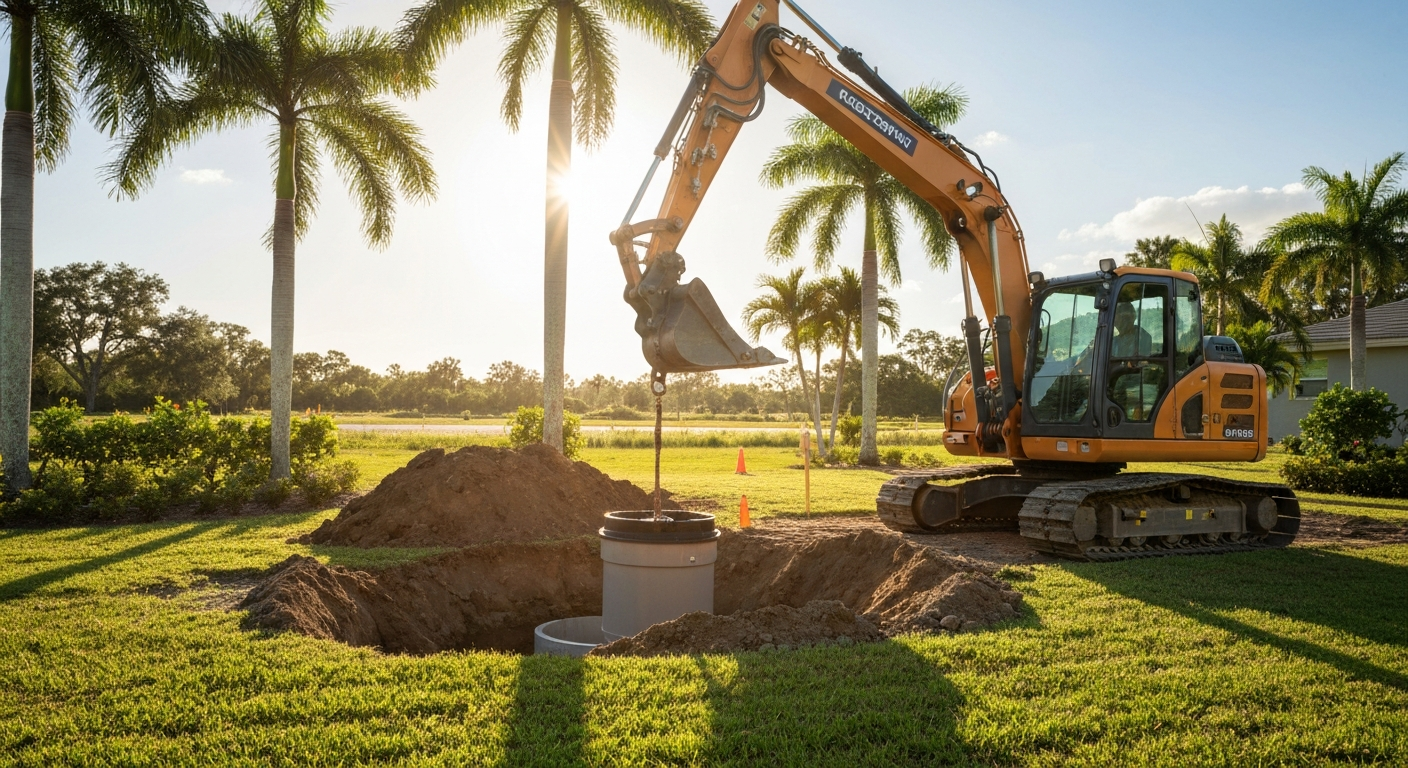
Septic Tank Installation & Replacement in Naples, FL
New construction or an aging tank that's due for replacement, done to code. We connect you with a licensed local pro who handles the whole process.
What Septic Tank Installation Actually Involves
A new septic system starts with a site evaluation, not a tank order. Soil type, water table depth, and household size all determine what size and type of system a property actually needs.
Real tank brands and materials matter here. Manufacturers like Infiltrator and Xerxes produce the tanks referenced in Florida DEP approval documentation, and the material and construction standards a tank has to meet are set by state code.
Every new system requires a county permit before installation, and a final inspection before it's approved for use.
Florida law requires septic installation to be performed by a DEP-registered or Master septic contractor. This isn't a homeowner DIY project under state code.
When a New Tank Makes Sense
You're building a new home that isn't connected to city sewer
Your current tank is old, cracked, or structurally failing
Repeated repairs haven't solved ongoing problems
An inspection has confirmed your tank needs to be replaced
A tank that's failing structurally, cracked walls, a collapsing lid, or persistent leaks, generally can't be repaired back to a reliable state.
How Septic Tank Installation Works
Site Evaluation
Soil type, water table depth, and lot size all factor into the right system size and design.
System Design and Permitting
The design gets submitted for the required county permit before any digging starts.
Installation
The tank and drain field get installed to code, sized correctly for the property.
Final Inspection
The completed system gets inspected and signed off before it's put into use.
Why Installation Design Matters Here
Collier County's sandy soil and high water table mean the site evaluation step carries more weight here than in areas with more stable, absorbent soil.
Golden Gate Estates continues to see new home construction on septic, given its distance from centralized sewer infrastructure, which means new installation work here is a genuinely ongoing part of the community's growth, not just a replacement scenario.
Naples Bay and the surrounding estuary system make water-quality regulation a locally prominent concern, and new or replacement systems in nutrient-sensitive areas may be required to install an ENR-OSTDS, an enhanced nutrient-reducing system, rather than a conventional tank. A site evaluation determines whether your property falls under this requirement.
What Septic Tank Installation Typically Costs
A conventional gravity system typically runs $5,000 to $9,000. If your site evaluation calls for an ATU, costs run higher, generally $15,000 to $35,000 or more, and an ENR-OSTDS requirement adds roughly $8,000 to $20,000 on top of a base install. Sites that need a mound system due to a high water table run higher still, see our Drain Field Replacement / Mound Systems page for that pricing.
Beyond the tank itself, expect $500 to $2,000 for the required perc test and site evaluation, and $250 to $1,000 for the county permit.
One ongoing cost worth planning for upfront: an ENR system requires an annual maintenance contract running $800 to $1,500 a year, compared to $300 to $500 a year for a conventional system.
These are typical ranges, not a quote. Your actual cost depends on system type, site conditions, and whether nutrient-reduction requirements apply to your property.
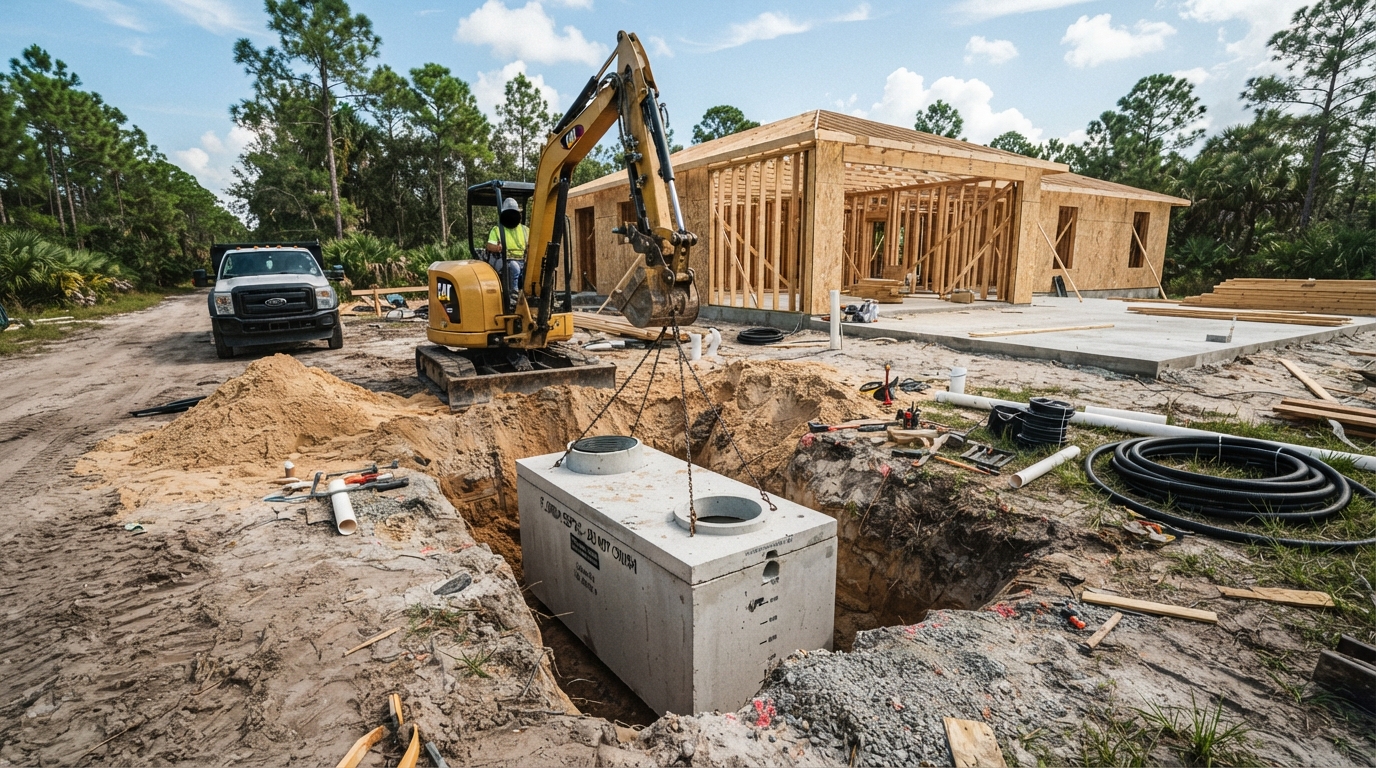
Example Job — New Construction, Golden Gate Estates
The Problem
A homeowner building a new house in Golden Gate Estates, not connected to city sewer, needed a septic system designed and permitted before construction could move forward.
The Diagnosis
A site evaluation confirmed the property's soil and water table conditions could support a conventional gravity system, consistent with much of the surrounding area, though a perc test was still required to confirm before design could proceed.
The Fix
The connected contractor designed a conventional system sized for the home's bedroom count, submitted the design for county permitting, and installed the system to the approved plan. A final inspection signed off before the county issued a certificate of occupancy.
Recurrence Prevention
The homeowner was set up with a reminder for their first pumping at the two-to-three-year mark, starting the new system off on a proactive schedule.
| Item | Cost |
|---|---|
| Site evaluation / perc test | $500–$2,000 |
| County permit | $250–$1,000 |
| Conventional system installation | $5,000–$9,000 |
| Total | $5,750–$12,000 |
Costs vary by system type, site conditions, and local permitting fees — this reflects a typical new-construction conventional system and is not a quote. A free estimate from your connected professional will confirm exact pricing for your property.
Why Naples Homeowners Call Us
Sized for Your Property
We connect you with pros who design the system based on your actual soil and site conditions.
Licensed and Verifiable
Every pro in our network is licensed for this work in Florida. You can check any contractor at myfloridalicense.com before work starts.
Permitting Handled
We connect you with pros who manage the permitting and inspection process from start to finish.
Experience With Golden Gate Estates Growth
We connect you with pros who regularly handle new septic installation in this actively growing, septic-dependent community.